


Hey there! As a supplier of corrugated pipe production lines, I often get asked about the moisture resistance of the pipes our machines produce. So, let's dive right into it and explore what makes these pipes stand up against moisture.
First off, let's understand why moisture resistance is such a big deal. Whether it's for drainage systems, underground cable protection, or other applications, pipes need to be able to withstand exposure to water and humidity without deteriorating. Moisture can cause all sorts of problems, like corrosion, rust, mold growth, and structural damage. That's why having pipes with good moisture resistance is crucial for ensuring long - term performance and reliability.
Types of Corrugated Pipes and Their Moisture Resistance
Single Wall Corrugated Pipes
Single wall corrugated pipes produced by our Single Wall Corrugated Pipe Production Line are made from various plastics, such as PVC or HDPE. These materials inherently have some level of moisture resistance. PVC is known for its chemical resistance, which includes resistance to water. It forms a tight barrier that prevents water from seeping through and causing damage to the pipe's interior.
HDPE (High - Density Polyethylene) used in single wall corrugated pipes is also highly resistant to moisture. It has a low water absorption rate, meaning it doesn't soak up water like a sponge. This property helps the pipe maintain its structural integrity even when in contact with water for extended periods. For applications where the pipe is exposed to occasional moisture, like in some agricultural irrigation systems or light - duty drainage, single wall corrugated pipes are a great choice.
Double Wall Corrugated Pipes
Our HDPE Double Wall Corrugated Pipe Production Line creates pipes that take moisture resistance to the next level. The double - wall design consists of an inner smooth wall and an outer corrugated wall. The smooth inner wall allows for easy flow of fluids, while the corrugated outer wall provides strength and rigidity.
The HDPE material used in these pipes is extremely hydrophobic. It repels water, and the double - wall structure adds an extra layer of protection against moisture penetration. The air pockets within the corrugated outer wall act as an insulator, reducing the risk of condensation forming inside the pipe. This is especially important in applications where the pipes are used underground or in areas with high humidity. For example, in sewage systems or large - scale drainage projects, double - wall corrugated pipes can effectively handle large volumes of water while resisting moisture - related damage.
Factors Affecting Moisture Resistance
There are a few factors that can influence the moisture resistance of the pipes produced by our corrugated pipe production lines.
Material Quality
The quality of the raw materials used is a major factor. High - quality HDPE or PVC will have better inherent moisture - resistant properties. We source the best - grade plastics for our production lines to ensure that the pipes we produce can provide long - lasting performance in wet environments. Inferior materials may have higher water absorption rates or be more prone to degradation when exposed to moisture.
Manufacturing Process
The manufacturing process also plays a crucial role. Our production lines are designed to create pipes with consistent wall thickness and proper bonding between layers (in the case of double - wall pipes). Any irregularities in the manufacturing process, such as thin spots in the wall or poor fusion of the layers, can compromise the pipe's moisture resistance. For instance, if there are gaps in the double - wall structure, water can seep in and cause damage over time.
Temperature and Environment
The operating temperature and the surrounding environment can impact moisture resistance. In colder temperatures, some plastics may become more brittle, which could potentially lead to cracks that allow water to penetrate. Additionally, if the pipes are exposed to extreme pH levels or chemicals in the water, it can affect the plastic's resistance to moisture. However, HDPE and PVC are known for their relatively wide tolerance to temperature and chemical variations, making our pipes suitable for a variety of environments.
Benefits of Moisture - Resistant Corrugated Pipes
Longevity
One of the biggest benefits of moisture - resistant pipes is their longevity. Since they are less likely to be damaged by water, they can last for decades without needing replacement. This reduces the long - term costs associated with maintenance and replacement. For infrastructure projects, this means less disruption and lower overall expenses.
Cost - Effectiveness
In the short term, moisture - resistant pipes may seem more expensive. However, when you consider the long - term savings in maintenance and replacement costs, they are actually a cost - effective choice. You don't have to worry about frequent repairs or the need to replace a damaged pipe system prematurely.
Environmental Friendliness
Our HDPE pipes are recyclable, which is an added environmental benefit. Since they have a long lifespan due to their moisture resistance, they reduce the demand for new materials over time. This helps in conserving natural resources and reducing waste.

Comparison with Other Pipe Materials
Let's compare our corrugated pipes with some other commonly used pipe materials in terms of moisture resistance.
Metal Pipes
Metal pipes, such as steel or iron, are prone to rust and corrosion when exposed to moisture. Even with coatings, over time, the coating can wear off, and the metal will start to deteriorate. In contrast, our plastic corrugated pipes are not affected by rust and corrosion, making them a better choice for wet environments.
Concrete Pipes
Concrete pipes can absorb water, which may lead to cracks and deterioration over time. Freezing and thawing cycles can exacerbate the problem. Our plastic corrugated pipes, on the other hand, are not affected by freezing and thawing, and their low water absorption ensures long - term stability.
How Our Production Lines Ensure Moisture Resistance
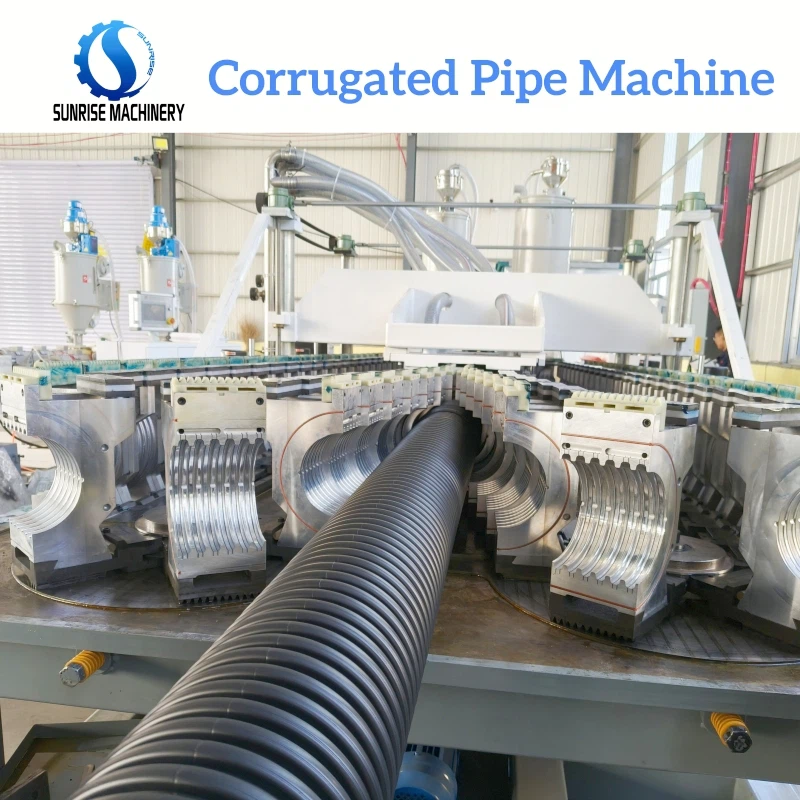
Our 52 100 - 300mm HDPE Double Wall Corrugated DWC Pipe Extrusion Machine and other production lines are equipped with state - of - the - art technology to ensure high - quality, moisture - resistant pipes.
We have strict quality control measures in place at every stage of the production process. From the raw material inspection to the final product testing, we make sure that each pipe meets our high standards of moisture resistance. Our machines are designed to produce pipes with uniform wall thickness and proper layer bonding, which are essential for maintaining moisture resistance.
Conclusion
In conclusion, the pipes produced by our corrugated pipe production lines offer excellent moisture resistance. Whether it's single wall or double wall corrugated pipes, they are made from high - quality materials and manufactured using advanced processes to ensure long - lasting performance in wet environments. The benefits of using these pipes, such as longevity, cost - effectiveness, and environmental friendliness, make them a top choice for a wide range of applications.
If you're in the market for quality corrugated pipes or are interested in our production lines, we'd love to talk to you. Reach out to us to discuss your specific needs and explore how our products can meet your requirements. We're here to help you make the best decision for your project.
References
- Plastics Industry Association. (2022). Plastic Pipe Handbook.
- ASTM International. (2021). Standard Specifications for Corrugated Plastic Pipes.


