


In the dynamic world of PVC profile manufacturing, the production speed of a PVC profile production line is a critical factor that directly impacts a company's productivity, cost - effectiveness, and overall competitiveness. As a trusted PVC profile production line supplier, I have witnessed firsthand the various elements that can either accelerate or impede the production process. In this blog post, I will delve into the key factors that affect the production speed of a PVC profile production line.
1. Raw Material Quality
The quality of the raw materials used in PVC profile production is fundamental. High - quality PVC resin with consistent particle size, purity, and molecular weight distribution can flow more smoothly through the extrusion process. When the resin has uniform properties, it requires less energy to melt and extrude, allowing the production line to operate at a higher speed.
On the other hand, low - quality raw materials may contain impurities, inconsistent particle sizes, or improper additives. These issues can lead to blockages in the extrusion die, uneven melting, and poor surface finish of the profiles. As a result, the production speed has to be reduced to ensure the quality of the final product. For example, if the PVC resin has a high level of moisture content, it can cause bubbles to form during extrusion, which not only affects the appearance but also weakens the structure of the profile. To avoid such problems, we always recommend our customers to source high - quality raw materials from reliable suppliers.
2. Extrusion Equipment Performance
The performance of the extrusion equipment is a major determinant of production speed. A well - designed and maintained extrusion machine can handle high - volume production at a faster rate. Modern extrusion machines are equipped with advanced screw designs, heating systems, and control mechanisms that optimize the melting and extrusion process.
The screw design plays a crucial role in the extrusion process. A properly designed screw can efficiently convey, compress, and melt the PVC resin. For instance, a barrier screw can separate the solid and molten phases of the resin more effectively, improving the melting efficiency and allowing for higher production speeds. Additionally, the heating system of the extrusion machine needs to be precise and stable. Inconsistent heating can lead to uneven melting of the resin, which may require a slower production speed to compensate.
Regular maintenance of the extrusion equipment is also essential. Worn - out parts, such as screws and barrels, can reduce the efficiency of the extrusion process and limit the production speed. By performing routine maintenance and replacing damaged parts in a timely manner, we can ensure that the extrusion machine operates at its optimal performance. Our company provides comprehensive after - sales service, including equipment maintenance training and spare parts supply, to help our customers keep their production lines running smoothly.
3. Die Design and Quality
The die is a critical component in the PVC profile production line as it determines the shape and dimensions of the final product. A well - designed die can ensure a smooth and uniform flow of the molten PVC resin, enabling high - speed production. The die should have a proper runner system that distributes the resin evenly across the cross - section of the profile.
Poor die design can lead to various problems, such as uneven wall thickness, surface defects, and flow marks. These issues may require the production speed to be reduced to correct the quality of the profiles. For example, if the die has a narrow runner in some areas, it can cause a pressure drop, resulting in uneven resin flow and inconsistent profile dimensions. In addition, the quality of the die material is also important. High - quality die materials with good wear resistance and heat conductivity can withstand the high - pressure and high - temperature conditions during extrusion, ensuring a longer service life and better production performance.
We offer a wide range of die designs for different types of PVC profiles, such as PVC Corner Bead Profile Production Line, PVC Door Frame Profile Extrusion Line, and PVC Wall Panel Profile Production Line. Our experienced engineers can customize the die design according to the specific requirements of our customers, ensuring high - quality and high - speed production.
4. Cooling and Calibration Systems
After extrusion, the PVC profiles need to be cooled and calibrated to maintain their shape and dimensions. The efficiency of the cooling and calibration systems can significantly affect the production speed. A fast - cooling system can quickly solidify the molten PVC profiles, allowing them to be cut and stacked in a shorter time.
The cooling process should be uniform to prevent warping and deformation of the profiles. Water - cooling systems are commonly used in PVC profile production, and the water temperature and flow rate need to be carefully controlled. If the cooling is too fast, it can cause internal stresses in the profiles, which may lead to cracking or other quality issues. On the other hand, if the cooling is too slow, the production speed will be limited as the profiles need more time to solidify.
The calibration system is used to ensure the accurate dimensions of the profiles. A well - designed calibration system can quickly and precisely shape the profiles to the desired specifications. It should be able to handle high - speed production without compromising the quality of the profiles. Our production lines are equipped with advanced cooling and calibration systems that are designed to optimize the production speed while maintaining high - quality standards.
5. Automation and Control Systems
Automation and control systems have revolutionized the PVC profile production process. An automated production line can significantly increase the production speed by reducing manual intervention and improving process consistency. Modern control systems can monitor and adjust various parameters, such as temperature, pressure, and speed, in real - time.
For example, an automated control system can adjust the screw speed of the extrusion machine based on the feedback from the downstream equipment, such as the cooling tank and the pulling machine. This ensures that the production process is optimized and the profiles are produced at a consistent quality. Additionally, automated cutting and stacking systems can handle high - volume production at a faster rate compared to manual operations.
We provide our customers with state - of - the - art automation and control systems that are easy to operate and maintain. These systems can be customized according to the specific requirements of each production line, allowing our customers to achieve maximum production efficiency.
6. Operator Skills and Training
The skills and training of the operators also play an important role in production speed. Experienced operators can quickly identify and solve problems during the production process, minimizing downtime and maximizing production efficiency. They are familiar with the operation of the equipment, the characteristics of the raw materials, and the quality requirements of the final product.

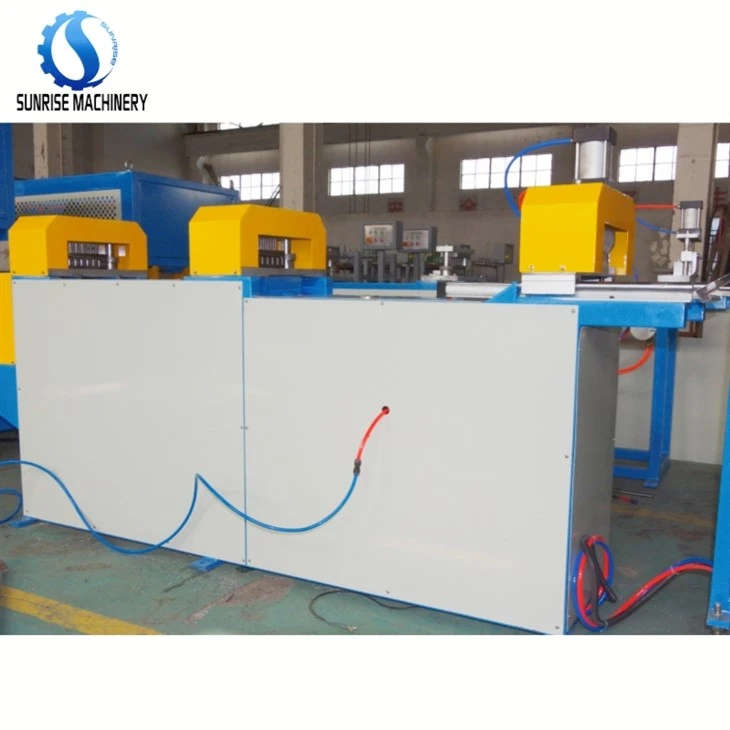
Proper training is essential for operators to acquire the necessary skills. We offer comprehensive training programs for our customers' operators, covering equipment operation, maintenance, troubleshooting, and quality control. By investing in operator training, our customers can ensure that their production lines are operated at their full potential, achieving higher production speeds and better product quality.
Conclusion
In conclusion, the production speed of a PVC profile production line is influenced by multiple factors, including raw material quality, extrusion equipment performance, die design and quality, cooling and calibration systems, automation and control systems, and operator skills and training. As a PVC profile production line supplier, we are committed to providing our customers with high - quality equipment, advanced technology, and comprehensive after - sales service to help them overcome these challenges and achieve high - speed production.
If you are interested in our PVC Corner Bead Profile Production Line, PVC Door Frame Profile Extrusion Line, or PVC Wall Panel Profile Production Line, please feel free to contact us for more information. We look forward to discussing your specific requirements and helping you optimize your PVC profile production process.
References
- Grootaert, E., & Rauwendaal, C. (2006). Polymer Extrusion. Hanser Gardner Publications.
- Throne, J. L. (1996). Thermoplastic Extrusion: Principles and Practice. Marcel Dekker.
- Osswald, T. A., & Hernandez - Ortega, S. (2006). Polymer Processing: Modeling and Simulation. Hanser Gardner Publications.


